
Custer County Federal Release Paths
A person can leave Custer County Jail for the U.S. Marshals Service when federal authority applies. That county departure is a handoff, not a community release. The sheriff’s release record should show the county segment and destination where public. Federal court and USMS records then explain pretrial detention, movement, or release authority. If a federal sentence follows, BOP becomes the correct source for prison location and eventual departure.
No BOP institution was located physically in Custer County. That directory finding does not rule out a temporary hold or contract arrangement. It means the public verification path normally leaves the county. Keep county, USMS, BOP, supervised release, and possible ICE custody as separate stages.
Sentenced custody
Use BOP for a federal prison term and the reported release date or custody status.
Pretrial custody
Use federal court orders and a focused USMS records request. There is no public USMS former-prisoner locator.
Search BOP Federal Release Records
The BOP inmate locator covers federal prisoners from 1982 forward. Search by BOP, DCDC, FBI, or INS number, or use name with age, race, and sex refiners. Results can display name, register number, age, race, sex, release date, and location or status.
- Choose BOP only for a federal sentence. Ordinary county detention and federal pretrial holding are outside its main role.
- Use a register number when possible. Otherwise compare every identity field and the federal case.
- Read the full result. Record the release date and exact wording, including “Released” or “Not in BOP Custody.”
- Check other systems. Search local, state, ICE, and court channels when another hold or transfer is possible.
- Preserve the search date. Sentence and credit changes can alter projected federal dates.
BOP expressly warns that a person shown released or not in its custody may be held elsewhere or remain on parole or supervised release. Report “BOP reports not in BOP custody” rather than “free.”
Federal Release Record Fields
A BOP result has a narrower purpose than a complete federal case history. Match its register number and identity to the court file. The public release date can establish BOP’s reported end of custody, but the court docket may still show supervised release, a new order, or another case. A projected date can change as sentence computations and First Step Act credits are applied.
| Source | What it can establish |
|---|---|
| BOP locator | Sentenced federal custody, release date, and BOP location or status. |
| Federal court docket | Detention or release order, sentence, and supervised-release terms. |
| USMS custody record | Pretrial processing, movement, placement, safekeeping, and disposition data subject to limits. |
| Custer sheriff record | When county custody ended and whether a federal agency received the person. |
| ICE locator | Possible current immigration custody after another federal segment. |
No-match language must remain system-specific. A BOP search does not cover every historic federal detention and begins in 1982. It also does not prove there is no current USMS, state, local, or ICE custody.
USMS Federal Release Contact
The Marshals Service has no BOP-style public historical locator. Its Prisoner Tracking System contains identifying and court information created during processing, placement, safekeeping, and disposition. For a public record, file a focused USMS Freedom of Information Act request with the full identity, federal case, event, date range, facility if known, and desired format.
Federal Records Routes
BOP: Public inmate locator for sentenced federal custody
USMS: Freedom of Information Act request for pretrial and movement records
Court: PACER and the relevant federal district court docket
Custer County facility: No physical BOP institution was located in the county.
Privacy, active-investigation, security, medical, and other exemptions can limit a USMS response. Ask for separable public portions. A court release order can establish legal authority, but the custodial record is stronger proof of physical departure. Use both when timing matters.
USMS Tracking Source View
The USMS Prisoner Tracking System description explains the federal pretrial and movement records held by the agency.
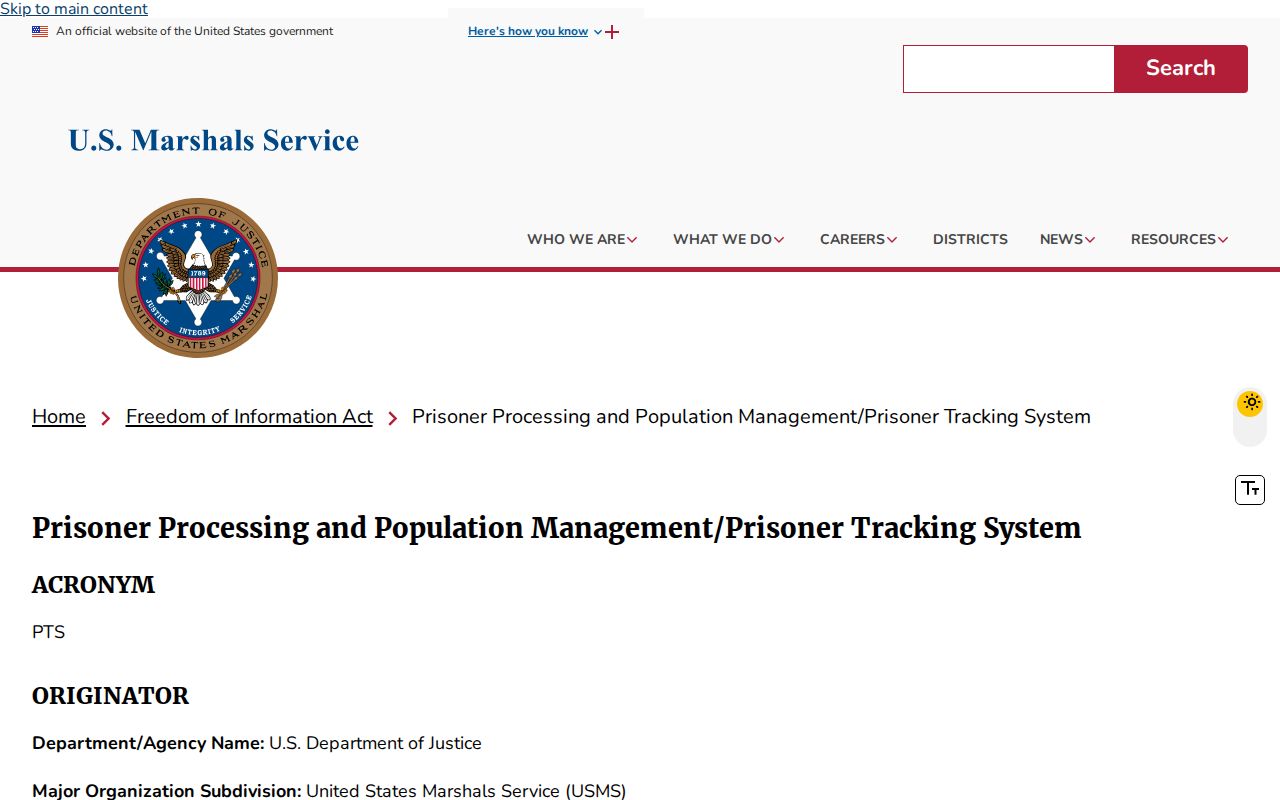
The source view supports a records-request route, not a public former-detainee search. Pair any response with the federal docket and the county transfer record where the path began in Custer County.
Custer County Federal Handoff
If Custer County’s roster no longer lists a person after a suspected federal transfer, request the sheriff’s actual departure time, public disposition, and receiving agency. A federal court order may show why custody changed. The USMS record should show the next segment, and BOP becomes relevant only if sentenced custody follows.
Do not infer federal release from county disappearance. The Custer County Jail release guide explains how to document the first handoff. A same-day gap between agencies may reflect transport and intake. Preserve each agency’s timestamp instead of inventing one seamless release time.
Custer Federal Release Timeline
A worked federal path begins with the county record. If the sheriff names USMS as the receiving agency, request the local departure time and related case identifier. Search the federal docket for detention, bond, release, sentence, or designation events. Then use USMS records for the pretrial and transport stage. Search BOP only when a federal prison sentence placed the person in BOP custody.
Physical release can lag a court order. Another warrant, hold, designation, transport step, or immigration action may keep the person confined. A federal docket order and a custodial record together provide stronger proof than either alone. State which milestone each source establishes. Do not merge detention order, sentence date, projected BOP date, BOP departure, and supervised release into one date.
For a released BOP result, compare register number, full name, age, race, sex, federal case, and sentence details. BOP coverage begins in 1982, so an older event needs court or archive records. If the locator date changes, retain the prior search date and check whether sentence or credit recalculation explains the change.
Custer County Federal Release Custody Map
OJA material identifies Custer County, Clinton, and Weatherford as local custodial entry points. Its juvenile-holding context does not prove current adult capacity or release hours. The angle matters in a federal case because the first local record may sit with city police rather than the sheriff.
Identify the arresting and releasing agency before seeking federal records. A city transfer to the county and a later county transfer to USMS create two separate departures. The federal court docket then adds legal context. Treating all three as “federal release” erases the actual custody path.
ICE After Federal Release
A person may leave BOP or USMS custody and enter ICE custody. BOP’s “Not in BOP Custody” wording does not rule out that result. ICE’s locator covers current immigration detention, not a historical archive. A no-match there is also inconclusive because exact-name rules, data delay, transfer, age limits, or another custodian may explain it.
The ICE detainer explanation describes how another agency may maintain custody for a limited period after it otherwise would release someone. This source is a reminder to verify the destination, not proof that a particular person entered ICE custody.
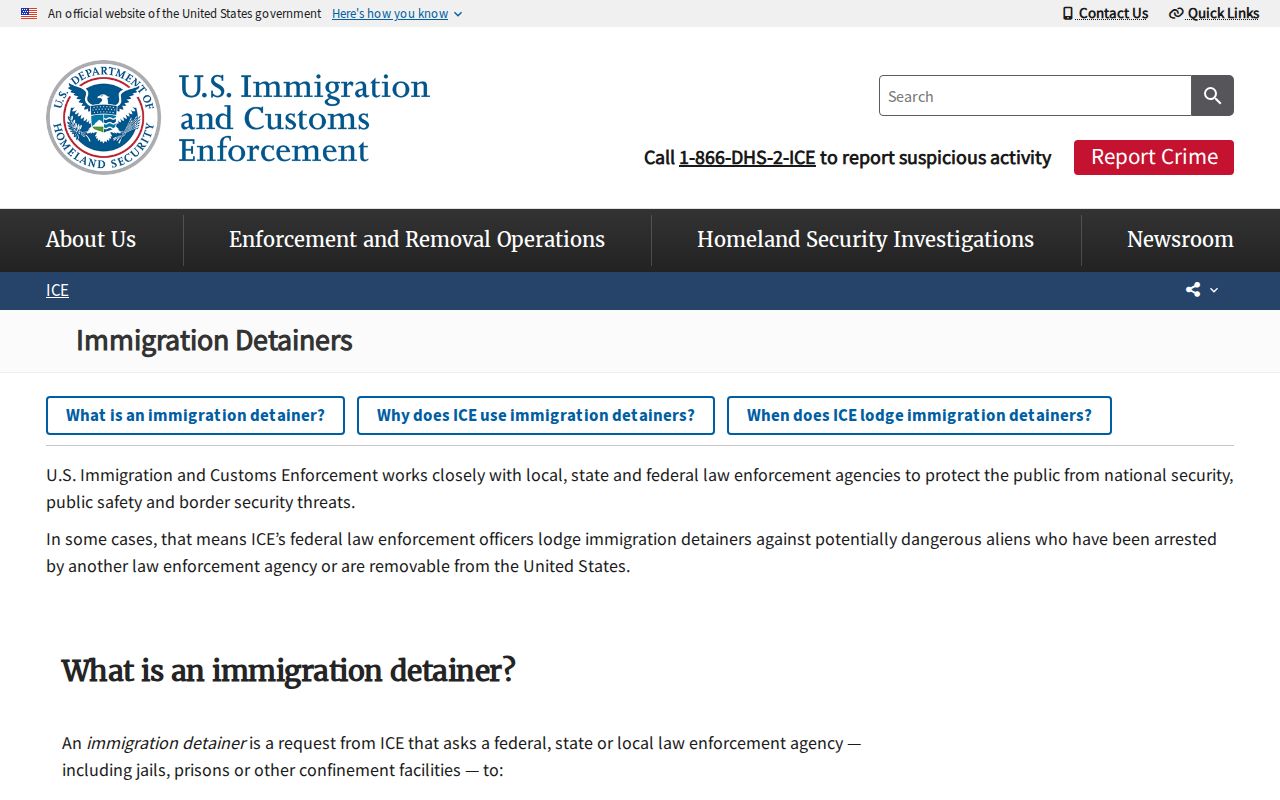
The image connects the federal release record to the next possible custodian. Only an individual agency record can establish the actual handoff.
Verify Federal Release Evidence
Compare full name, aliases, date of birth or age, register number, FBI or INS number, federal case, charges, sentence, and dates. A shared name is not enough when another identifier conflicts. Record which locator or court was searched and when.
State the result in layers: the Custer record shows county departure; USMS and court records show the pretrial segment; BOP reports sentenced-custody status and date; another system may show a later hold or supervision. The Custer County release search supplies state, local, VINE, court, and immigration fallbacks.
When an official source omits a destination, do not convert silence into community release. Ask USMS for the disposition segment and BOP for the sentenced-custody record as appropriate. Privacy and active-case exemptions may restrict details, but a partial response can still identify dates or agency boundaries. If the federal court shows release while a local or ICE source shows custody, report both. The court order may have ended one basis for detention without ending all custody.
BOP’s locator starts with federal prisoners from 1982 forward and cannot answer every pretrial question. A focused USMS request should identify the person, federal case, event, narrow date range, possible facility, and requested format. Pair the response with the federal court’s detention or release order.
Note: “Not in BOP custody” ends only the BOP question unless other records confirm the person’s destination.