
Custer County State Release Paths
No ODOC prison was located inside Custer County in the official directory reviewed. The statewide system may receive a person sentenced in a Custer County case. A judgment committing someone to ODOC does not mean that state reception occurred at once. ODOC says normal transport after sentencing can take six to nine months, with some short sentences and return-to-court cases receiving priority. During that wait, the person can remain physically in the county jail.
Later ODOC departure may be parole, conditional release, discharge, transfer, or another status. Parole means release from secure prison custody for the remaining term under conditions. Discharge is stronger evidence that the correctional or supervision term has ended, though every active case should still be read. A blank facility field alone does not prove either event. Use the statewide offender record and, when needed, ODOC’s discharge channel.
County departure
The sheriff record shows when Custer County Jail custody ended and whether ODOC was the destination.
State departure
ODOC shows later prison release, community supervision, or discharge from the state term.
Search Oklahoma DOC Release Records
Open the ODOC offender lookup, accept its disclaimer, and search by full name or ODOC number. The site currently warns that movement to a new data source created issues, and ODOC calls the public information abbreviated. Treat an unclear result as a reason to verify, not as permission to fill gaps.
- Search narrowly. Use the ODOC number when known; otherwise use the full legal name and variants.
- Confirm identity. Compare birth information, image, physical identifiers, county and case, offenses, and sentence dates.
- Read status with location. A prison facility, supervision office, parole status, and discharge status describe different stages.
- Separate PRD from release. A projected release date is an estimate, not proof that departure occurred.
- Request clarification. Contact Legal Services or the discharge unit when the public entry does not establish the completed event.
Document the query and search date. If a name produces no result, report only that ODOC did not return a match. Spelling, identity, data migration, sealing, timing, and system boundaries can explain the gap.
Oklahoma DOC Release Fields
ODOC public information may include name, ODOC number, photograph, physical identifiers, offenses and sentences, reception dates, status, prison or supervision location, and projected-release information. Read the fields together. A supervision location may show that secure prison custody ended, but it does not mean the sentence discharged. Probation can also arise from a suspended or deferred court sentence rather than a prison release.
| ODOC field | Use |
|---|---|
| ODOC number and identity | Distinguishes people with the same or similar names. |
| Reception date | Shows entry into the state correctional system. |
| Status and location | Separates prison custody, supervision, parole, or discharge. |
| Offense and sentence | Links the state record to the Custer County judgment. |
| Projected release date | Shows ODOC’s current estimate, not a completed departure. |
ODOC also describes a downloadable public offender dataset containing names, sentences, reception dates, status, and related public information. It can help when the interactive page is unstable, but it remains a state dataset. It is not a county jail release log and does not replace a certified or agency response for a disputed field.
Oklahoma DOC Discharge Contact
Use ODOC Legal Services for an open-records request or contact the published discharge channel. Identify the person by full name and aliases, date of birth, ODOC number, Custer County case number, and the public fields sought. A well-scoped request can seek reception, public custody status, completed release or discharge date and category, and public supervision status.
ODOC Records Channels
Legal Services: 405-425-2515
Closed Records: 405-425-2691
Discharge email: osordischarges@doc.ok.gov
Online route: ODOC Legal Services open-records form
Custer County facility: No physical ODOC prison was located in the county directory reviewed.
ODOC publishes a separate authorization form for nonpublic incarceration or supervision material that requires the subject’s permission. Exact future release dates and parts of field files may be confidential. Ask for public completed-event data instead of demanding a future day that ODOC may not disclose.
ODOC Public Data Source
The ODOC public offender-data page describes the state dataset and the types of public corrections fields available.
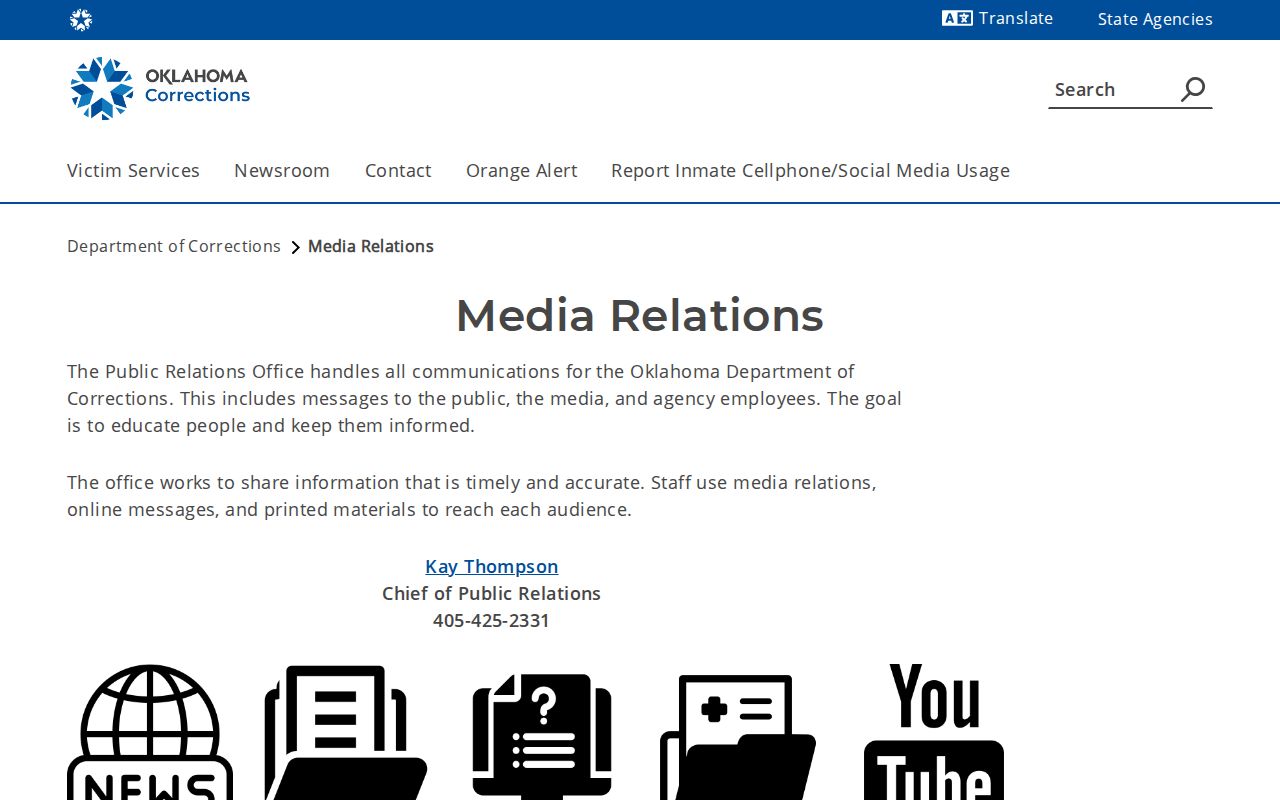
The screenshot supports a state-record search path, not a county roster path. Compare its data to the interactive offender detail and a direct ODOC response when status or discharge timing is unclear.
The downloadable file can preserve statewide context when the interactive result is unstable. ODOC describes it as including names, sentences, reception dates, status, and similar public fields while excluding private data. Questions about that dataset may be directed to Renee Lanier at 405-740-6496 or renee.lanier@doc.ok.gov. A row in the file still does not prove when Custer County custody ended. Match it to the county case and obtain the sheriff departure record when the transfer date matters.
Custer County Reception Sequence
A Custer County court judgment may establish an ODOC sentence while the person remains at the county jail. The county release record later shows when local custody ended, and ODOC shows reception into the state system. A gap between those entries can reflect transport or data-entry timing. It should not be described as an unexplained community release.
Once ODOC receives the person, compare ODOC number, reception date, court and case, sentence, and photograph. For a later prison departure, use ODOC status, release or discharge information, and supervision location. The Custer County Jail page covers the prior county segment. Keeping the two records distinct makes the transfer path clear.
Oklahoma PRD Is Not Release
Projected Release Date, or PRD, is ODOC’s estimate of when a prisoner may leave. The Pardon and Parole Board does not calculate it. Credit class, earned achievement credits, misconduct, restoration, restricted-credit rules, sentence changes, and other events can move the estimate. ODOC’s FAQ also says the exact date is tentative and may be confidential without a qualifying need.
A public PRD that has passed is not proof of completed release. Check the current status and seek a discharge response. Oklahoma’s 85-percent provision applies only to offenses listed in 21 O.S. § 13.1 and related attempt, conspiracy, or solicitation. It sets a floor before parole consideration for those offenses. It is not a rule for every state sentence, and reaching the floor does not guarantee parole or departure.
Custer County State Custody Map
Local custodial entry points include the Custer County Jail and city holding operations in Clinton and Weatherford. OJA material helps identify those doors, but its juvenile-compliance context does not establish adult capacity or release hours. A local arrest record can lead into ODOC only after the relevant judgment and transfer sequence.
For state custody, ODOC owns reception and later prison or supervision status. The Pardon and Parole Board owns hearing and decision material, not the physical release record. The Weatherford Probation and Parole office serves Custer County supervision matters. A favorable parole result remains a decision milestone until ODOC records actual departure and supervision.
Verify Oklahoma DOC Discharge
Resolve conflicts by matching each source to its job. The sheriff shows county departure. The district court shows the sentence or later order. ODOC shows state reception, status, prison release, supervision, and discharge. Parole Board papers show consideration and outcome. No single page necessarily owns the whole chain.
Report “released from ODOC prison on parole” when the state record supports both departure and parole. Report “ODOC term shown discharged” only when discharge is established. If only a PRD appears, call it a projection. If a record shows no current prison location but remains ambiguous, request clarification. The broader Custer County release guide explains VINE, court, county, federal, and immigration cross-checks.
A parole worked path begins with the Board’s monthly docket, matching result, and formal minutes when available. Record the exact outcome rather than turning each favorable vote into a completed release. Check the ODOC detail afterward for physical prison departure and supervision status. Eligibility, recommendation, executive action where required, conditions, detainers, and release are separate milestones. The Weatherford supervision office can route a Custer County parole or probation question, but its role does not replace ODOC’s prison record.
Identity checks should compare full name, aliases, date of birth or age, ODOC number, photo, offense, Custer County case, reception date, and sentence. If the online detail conflicts with a formal ODOC response, state the conflict and seek clarification. Data migration or update timing can explain a mismatch. Keep the public search date so a later status change can be understood.
Note: Leaving an Oklahoma prison and completing the full ODOC sentence are separate events that require separate wording.